
Leave a Comment / Blogs / By Dr. Anup Banerjee
Brain Waves: A Kind of Electrical Energy
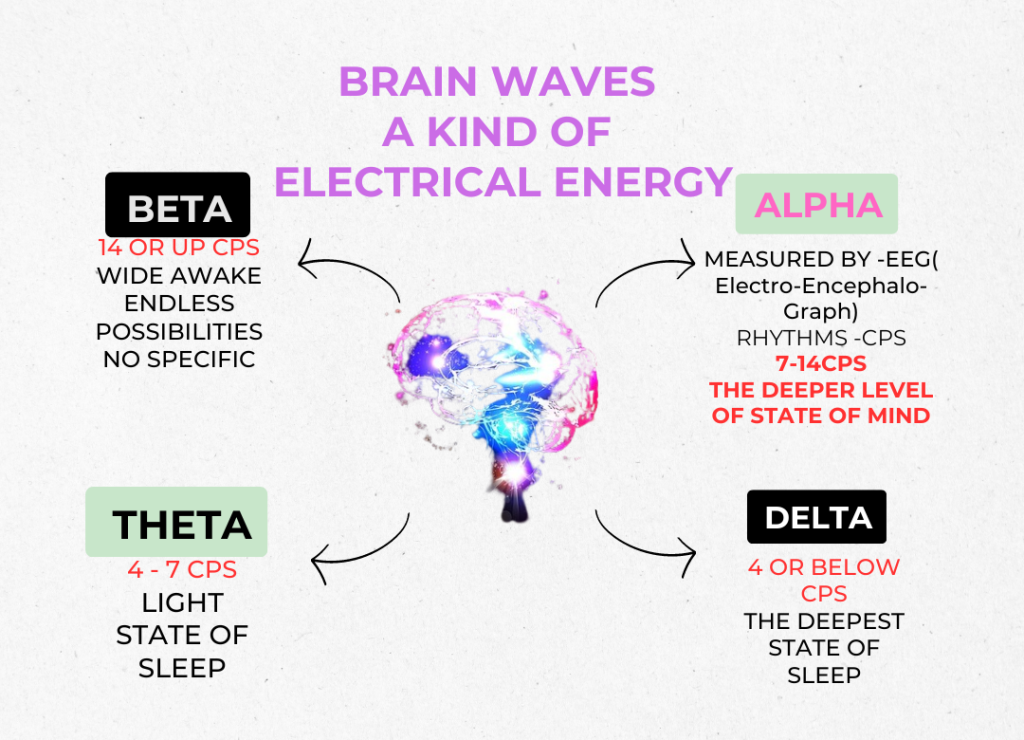
The human brain is a marvel of bioelectric activity, constantly generating electrical impulses that can be measured in cycles per second, or Hertz (Hz). These electrical impulses, known as brain waves, are pivotal in determining our mental states and capabilities. Understanding these brain waves—Beta, Alpha, Theta, and Delta—provides profound insights into how our mind operates and functions at different levels of consciousness and activity.
The Four Types of Brain Waves
1. Beta Waves (14 Hz and above)
Definition: Beta waves are the fastest brain waves, typically measuring 14 Hz and above. These waves are associated with active, alert, and focused mental states.
Examples: When you’re solving complex mathematical problems, engaging in a lively debate, or even typing an important email, your brain is likely in a Beta state. This state is characterized by heightened alertness, concentration, and cognitive functioning.
Analysis: Beta waves are crucial for tasks that require conscious thought, logical reasoning, and problem-solving. However, prolonged Beta activity without rest can lead to stress and anxiety
2. Alpha Waves (7-14 Hz)
*Definition:* Alpha waves are slower than Beta waves, ranging from 7 to 14 Hz. They represent a state of relaxed alertness and are most prominent when we are calm and not actively processing information.
Examples: When you are daydreaming, meditating, or just winding down with a book, your brain is likely producing Alpha waves. This state is also common when you close your eyes and relax.
Analysis: Alpha waves are important for relaxation and mental coordination. They facilitate a sense of calm and are often seen as the gateway to deeper states of consciousness. This state is also ideal for creative thinking and problem-solving when not under pressure.
3. Theta Waves (4-7 Hz)
Definition: Theta waves are slower still, between 4 and 7 Hz, and are associated with light sleep, deep relaxation, and meditative states.
Examples: Theta waves are predominant during the early stages of sleep, deep meditation, or when you’re in a state of flow, such as being deeply engrossed in a creative activity.
Analysis: Theta waves are essential for learning, memory, and intuition. They allow for the integration of emotional experiences and can promote healing and recovery. This state also supports creativity and insight, as it allows the brain to process information below the level of conscious awareness.
4. Delta Waves (4 Hz and below)
Definition: Delta waves are the slowest, measuring 4 Hz and below. They occur during deep sleep and are crucial for restorative processes.
Examples: Delta waves dominate during the deepest stages of sleep (such as during non-REM sleep), where the body and brain undergo repair and regeneration.
Analysis: Delta waves are vital for physical and mental restoration. They support deep sleep, which is essential for overall health, immune function, and brain rejuvenation.
State for High-Level Concentration
Among the various brain wave states, Alpha waves are typically the most important for high-level concentration and cognitive tasks that require intense focus. When you’re in a this state, your brain is actively engaged in mental activities, processing information quickly, and making decisions effectively. This makes Beta waves crucial for academic and professional tasks that demand sustained attention and cognitive performance.
However, it’s important to maintain a balance. While Beta waves support concentration, prolonged Beta activity can lead to stress and burnout. Incorporating periods of Alpha and Theta states through relaxation techniques, meditation, or short breaks can help rejuvenate the brain and maintain overall cognitive health.
Conclusion
Understanding brain waves—Beta, Alpha, Theta, and Delta—offers valuable insights into our mental states and how we can optimize brain function for different activities. While Beta waves are essential for high-level concentration and cognitive tasks, balancing these with periods of relaxation (Alpha) and deep rest (Delta) ensures a healthy, well-functioning brain. Embracing this balance can lead to improved mental performance, creativity, and overall well-being.
← Previous Post
Leave a Comment
Your email address will not be published. Required fields are marked *